
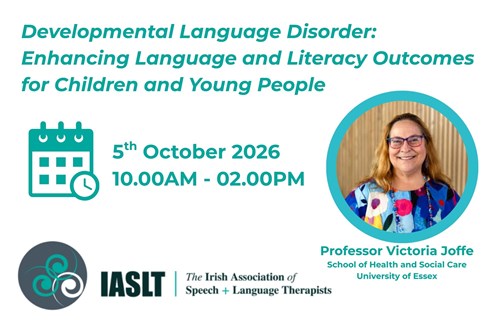
Workshop Synopsis
Developmental Language Disorder (DLD) is one of the most common neurodevelopmental conditions, however, it remains under-identified and frequently misunderstood. DLD is persistent and pervasive across the lifespan, with far‑reaching consequences for language, literacy, academic attainment, and health and wellbeing.
The session will establish a clear, shared understanding of the nature of DLD across the lifespan: its defining features, developmental trajectories, common misconceptions and its pervasive impact on spoken language, reading, and writing development. It will explore the close and reciprocal relationship between oral language, reading, spelling, and written expression.
Drawing on current evidence, developmental models, and clinical examples, the session will examine how language difficulties interact with literacy acquisition, explore why children with DLD are at high risk of persistent literacy difficulties, and the implications of this on assessment, intervention, and the collaboration with teaching and support staff in education.
The workshop will include practical and evidence-informed strategies that speech and language therapists and teachers can use, directly and indirectly, in individual, group and whole class settings, to effectively enhance language and literacy outcomes for children and young people across developmental stages. It will emphasise the role of speech and language therapists in supporting evidence-informed, developmentally sensitive approaches to enhancing language and literacy across settings in children, adolescents and adults with DLD.
Delegates will have the opportunity to share their own experiences of current and best practice in enhancing language and literacy in DLD. At the end of the session, delegates will understand DLD and its wider impact on literacy and health and wellbeing. They will have had the opportunity to explore how this information interacts with their own experience and understanding from their practice and will be able to formulate clear evidence-based objectives and actions for working with their own client groups.
Learning Outcomes
By the end of this workshop, participants will be able to:
Biography:
Victoria Joffe is Professor of Speech and Language Therapy, and Dean of Integrated Health and Care Partnerships at the University of Essex. Victoria’s area of clinical and research expertise includes Speech, Language and Communication Needs (SLCN) in children, young people and adults, Developmental Language Disorder, the interface between education and speech and language therapy collaborative practice and the training of therapy and teaching staff, Narrative and Vocabulary Interventions, language and literacy development, and evidence-based practice.
Victoria works with various health trusts, integrated care systems, education authorities and third sector organisations devising and evaluating research into models of service delivery across the lifespan. She provides training and consultancy to professionals working with children and young people with Special Educational Needs and Disability (SEND).
Victoria is co-editor of the journal, Child Language Teaching and Therapy, and acts as a speech and language therapy partner for the Health and Care Professions Council. She is chair of the RCSLT’s national clinical excellence network for older children and young adults with developmental SLCN.
Victoria has recently been working on three National Institute Health Research-funded research projects looking into new interventions for children with social communication disorder, children with Down Syndrome and children who stutter. She is currently involved in research on the use of apps to facilitate communication in adults with aphasia, and in a new study modelling Allied Health Professional service provision to meet the needs of children and young people with SEND.
Visit the CPD Events FAQ page HERE

If you have are having difficulty logging in or registering, please contact us at cpdadmin@iaslt.ie.
Sign in to your account to continue.